
Mount Everest Through Sherpa and Local Eyes | Beliefs, Culture & Traditions
Mount Everest Through Sherpa and Local Eyes
When we think of Mount Everest, most of us imagine adventure — climbers, snowstorms, and the thrill of standing on the highest point on Earth. But for the local Sherpa people who live around it, Everest is much more than a mountain. It’s a living goddess, a protector, and a symbol of spiritual life. In this blog, let's go deep into how locals view Mount Everest through their eyes.
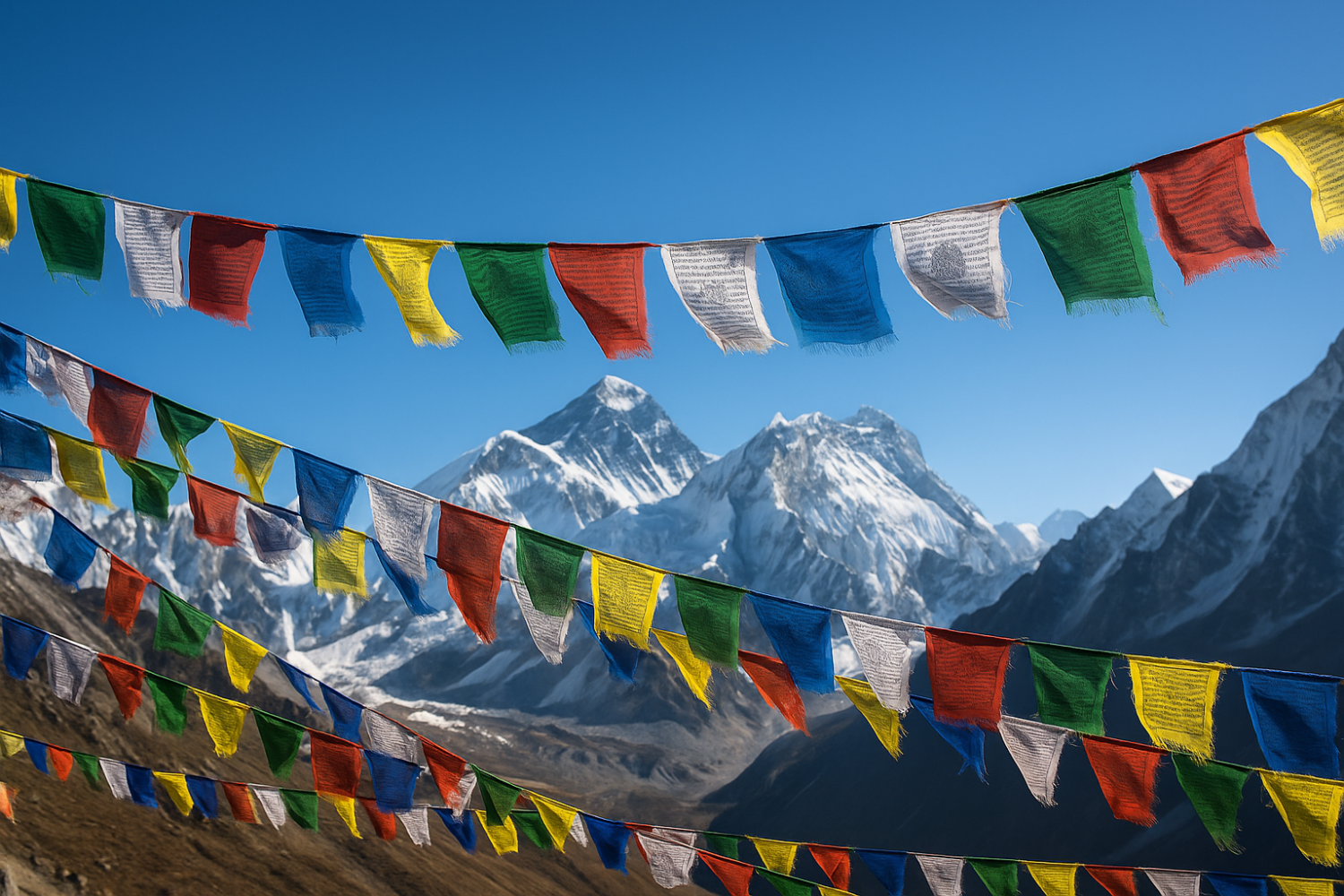
Prayer flags fluttering with Everest in the distance.
Everest Has a Soul: “सगरमाथा हाम्रो आमा हो”
In Nepali, people often say: “सगरमाथा हाम्रो आमा हो।” It means “Sagarmatha is our mother.” This simple line shows how deeply locals respect the mountain. They believe Everest (called Chomolungma in the Sherpa language) is not just rock and snow — it’s a divine mother, watching over her children. Before anyone climbs her slopes, locals perform puja — a small ritual to ask for permission and protection. No one dares to step on the mountain without showing respect first.
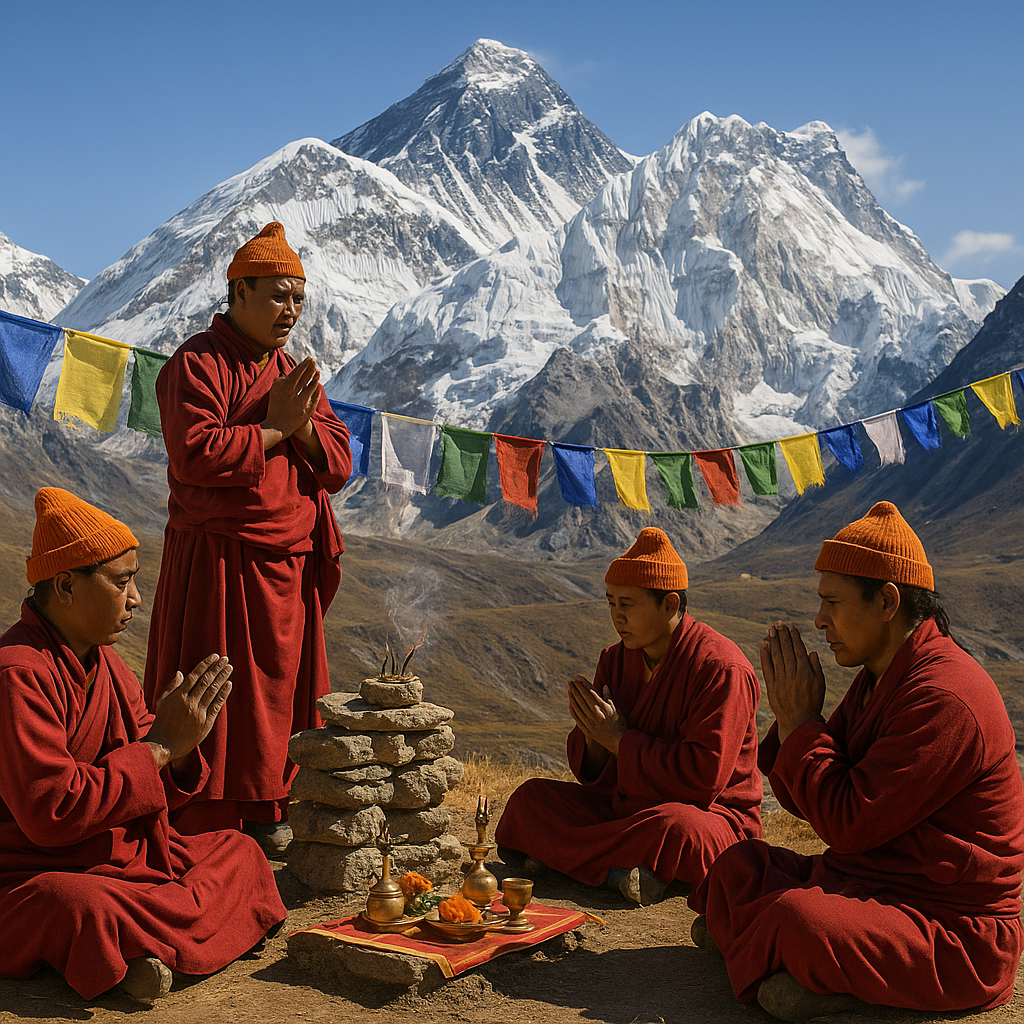
Puja ceremony before every Everest expedition for safety and blessings.
The Ritual of Respect: Puja Before Every Journey
Before every expedition, Sherpas gather around a stone altar called a “chorten”. They light incense, offer food, and raise colorful prayer flags. The Lama (monk) chants mantras, and everyone bows their heads as they ask Chomolungma to keep them safe.
The climbers place their ice axes, crampons, and ropes in front of the altar to be blessed. It’s believed that without this ritual, the mountain may show her anger through bad weather, accidents, or avalanches. To the locals, Everest is not something to conquer — she’s someone to honor.
The Wind that Carries Prayers
Have you ever seen prayer flags fluttering in the cold Himalayan wind? Locals believe that as these flags flap, they carry prayers across the sky — spreading peace and blessings not just to the people below, but to the entire world.
There’s a saying: “हावा चलेको बेला, देवताले हाम्रा प्रार्थना सुन्छन्।” That means, “When the wind blows, the gods hear our prayers.” So, when the strong winds roar around Everest, locals don’t just hear noise — they hear the voice of the mountain, whispering blessings and stories through the air.
Life Around Everest: Simplicity and Faith
In the small villages of Namche Bazaar, Tengboche, and Khumjung, life moves slowly but peacefully. People wake up before sunrise, light a butter lamp, and offer a silent prayer facing the mountain. Children grow up hearing stories of Everest’s kindness and strength. Old grandmothers tell tales like: “If you respect the mountain, she will protect your family.” They believe that helping others, being honest, and living simply are ways to honor Chomolungma every day.
Festivals and Beliefs
During festivals like Dumje and Mani Rimdu, the monasteries echo with drums and chanting. Monks dance wearing colorful masks — each movement symbolizing the balance between humans and nature. Everest’s shadow is always near, reminding people that they live at the home of gods.
Even during harvest or when building a new house, locals say a small prayer to the mountain, believing: “जहाँ विश्वास हुन्छ, त्यहाँ शक्ति हुन्छ।” That means “Where there is faith, there is power.”
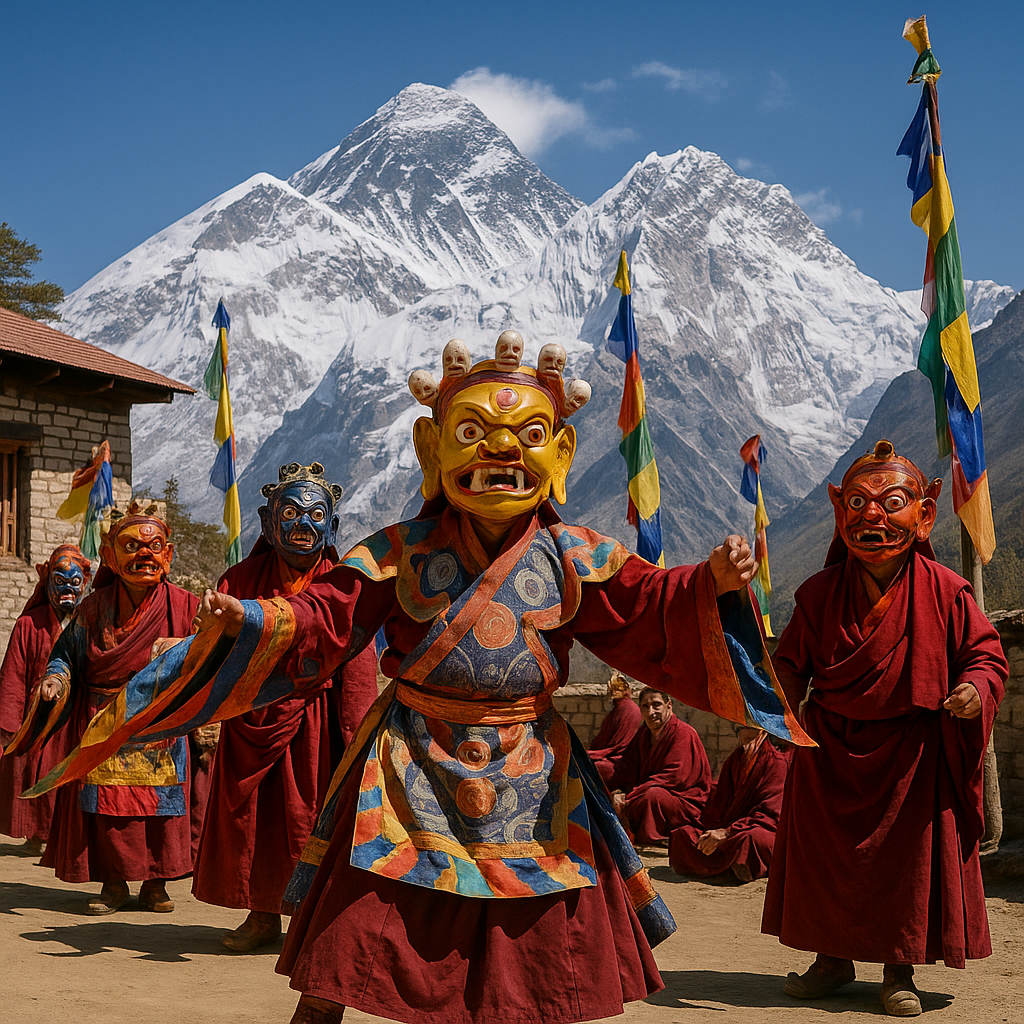
Mani Rimdu Festival in Tengboche Monastery celebrating faith and balance.
A Different Kind of Summit
To most travelers, Everest is a dream to climb. But to the Sherpa people, reaching the top is not the goal. The true goal is to live in harmony with the mountain — to listen to her moods, respect her silence, and feel her spirit in every sunrise. When you trek through the Khumbu Valley, you can see it in their eyes — a quiet pride and deep peace. They don’t just see Mount Everest; they feel her.
A Lesson for Every Trekker
If you ever trek in the Everest region, take a moment to stand still and listen. You may hear the flutter of prayer flags, the murmur of a river, or the whisper of the wind. Those are not just sounds — they are messages from the mountain. Everest is not asking to be conquered. She’s asking to be understood, respected, and loved.
Or as the locals softly say: “सगरमाथा बोल्छिन्, तर सुन्न जान्नुपर्छ।” (“Everest speaks, but you must know how to listen.”)
Conclusion
Mount Everest — or Sagarmatha, or Chomolungma — is not just the tallest peak in the world. She’s a sacred space where faith, culture, and nature meet. To the locals, she’s not a challenge, but a blessing. And maybe that’s what the rest of us can learn too — that the greatest mountains are not the ones we climb, but the ones we learn to respect.
For more details about Mount Everest, visit Hiking Paradise.

.png)


